
Ankle & leg
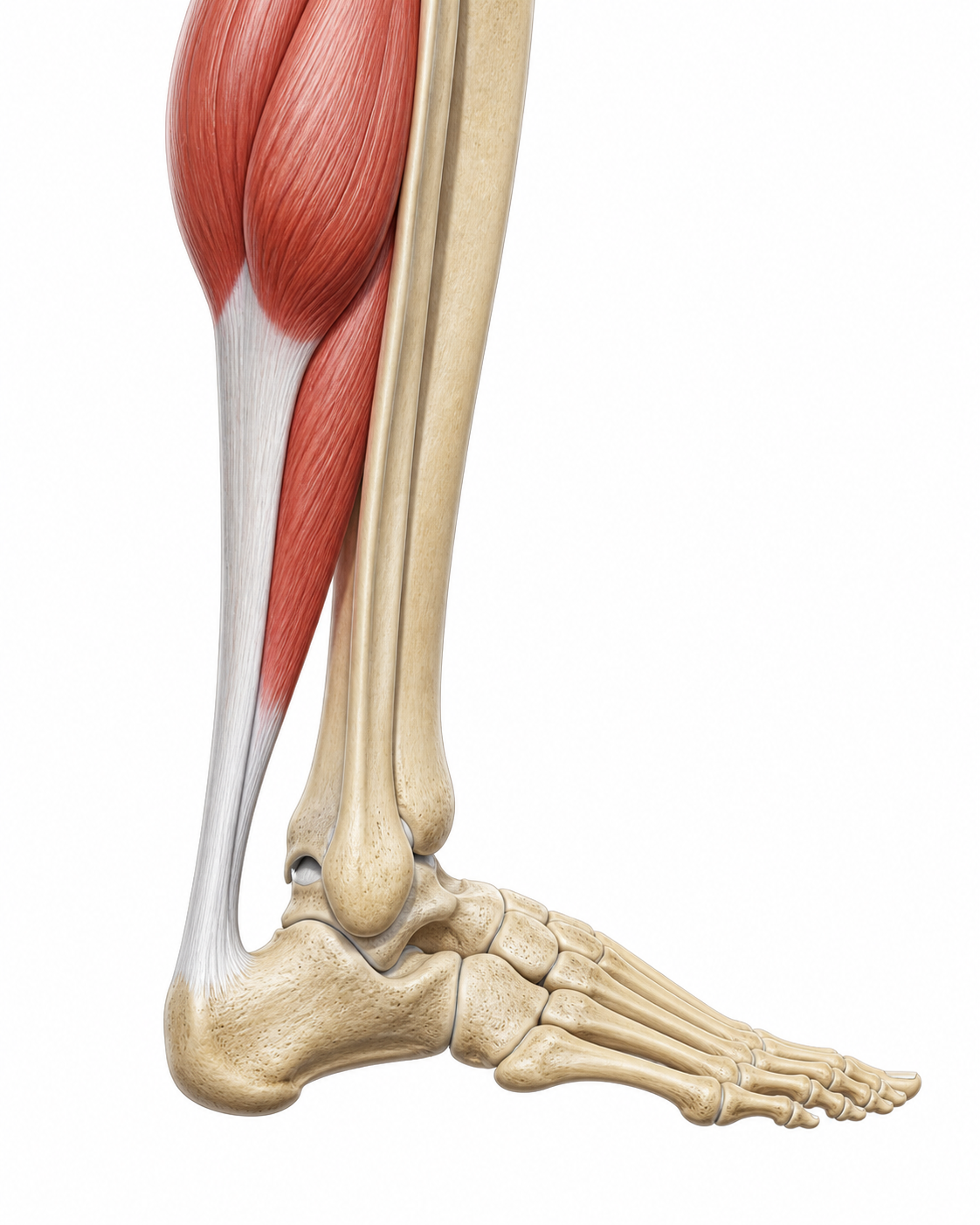
Achilles Tendinopathy
The Achilles tendon is a thick, fibrous cord that connects your calf muscles to your heel bone and functions like a spring to store and release energy during walking, running and jumping activities. The tendon has the capacity to handle a significant amount of load due to its spring-like properties.
During running, the tendon accepts seven times your body weight with each step. However, it has the potential to become injured if it is repeatedly exposed to loads greater than your usual capacity.
Read more about Achilles tendinopathy here
Lateral Ankle Sprain
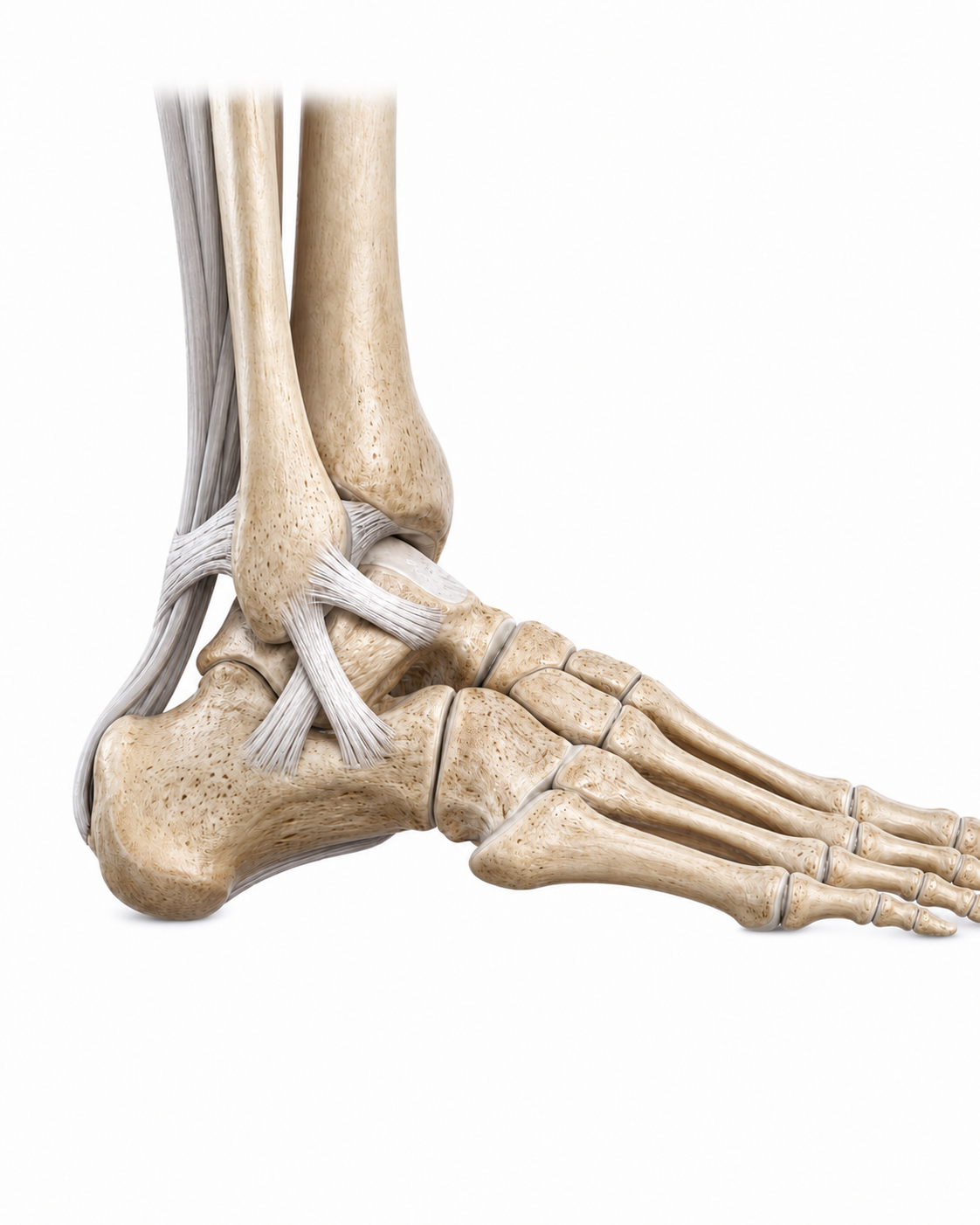
An ankle sprain occurs when your ankle rolls or twists beyond its normal range, which can result in stretching or damage to the ligaments that stabilise your ankle. The most common ankle sprains will affect the ligaments on the outside of your ankle.
Unfortunately up to 40% of people who suffer ankle sprains can go on to develop chronic ankle instability.
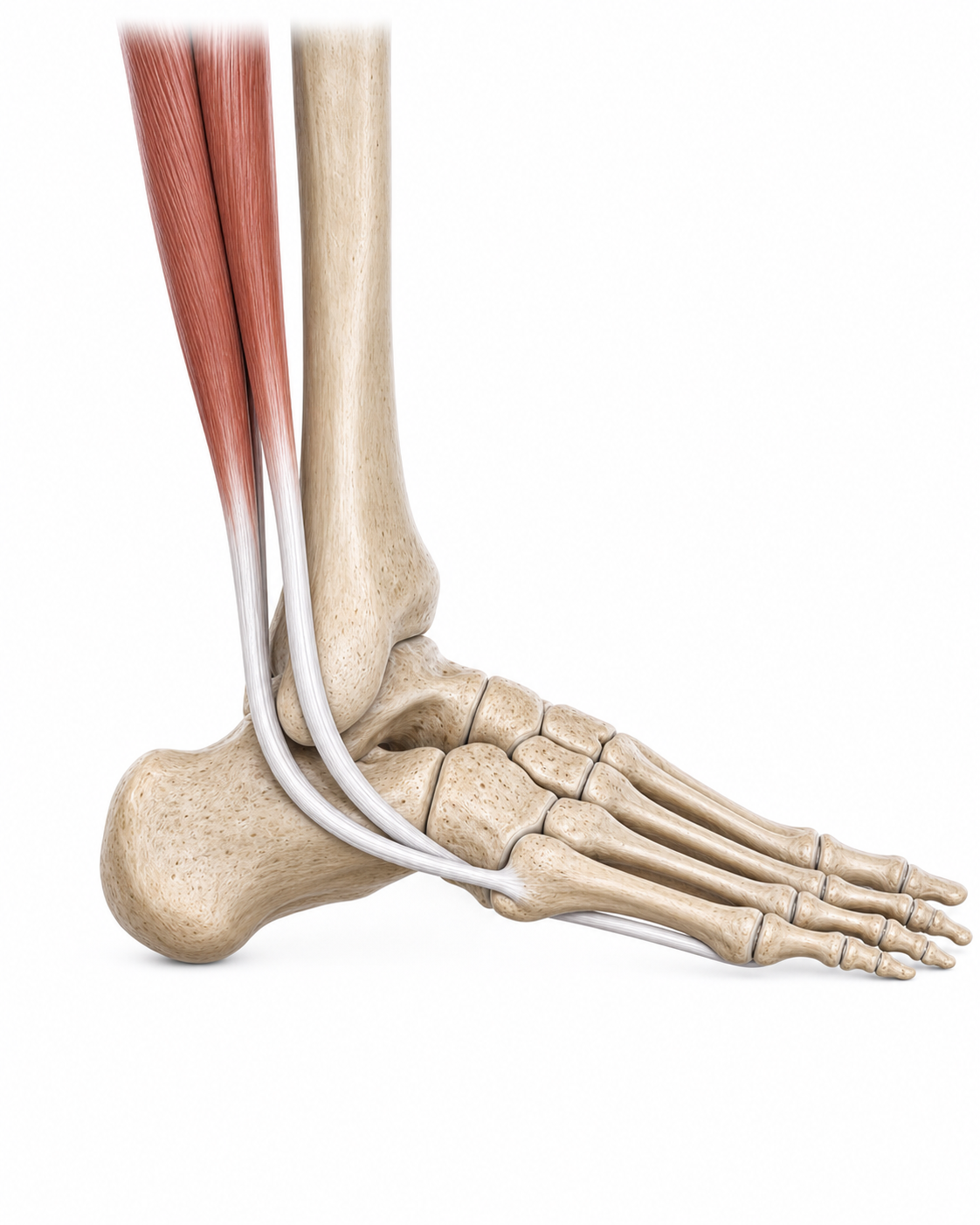
Peroneal Tendinopathy
The peroneal tendons connect the peroneal muscles to the bones of your foot and help with maintaining your balance. One tendon (peroneus brevis) attaches at the base of the fifth toe, while the other tendon (peroneus longus) attaches to the sole of the foot, inside of the arch.
Either of these two tendons can develop tendinopathy if there is an increase in your load which places excessive strain on the tendons.
Posterior Tibial Tendinopathy
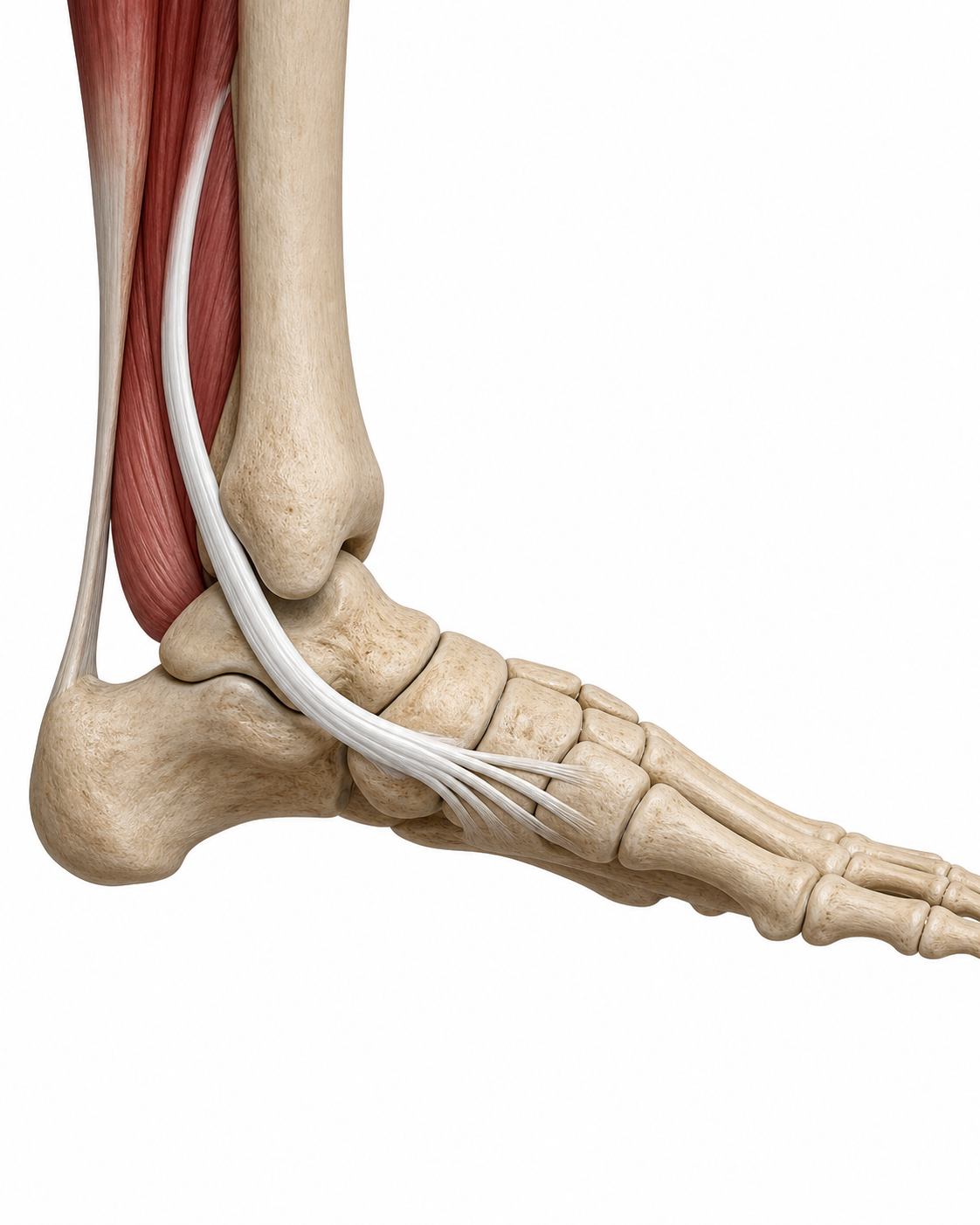
The tibialis posterior muscle is located behind your calf muscle and attaches directly to the back of your shin. The tendon of this muscle works like a spring to store and return energy when you are walking and running.
However, it can become overloaded due to a rapid increase in your training load, reduced muscle strength or as your shoes become worn, which places greater strain on the tendon. This can lead to the development of inflammation around the tendon, which can progress to tendinopathy.
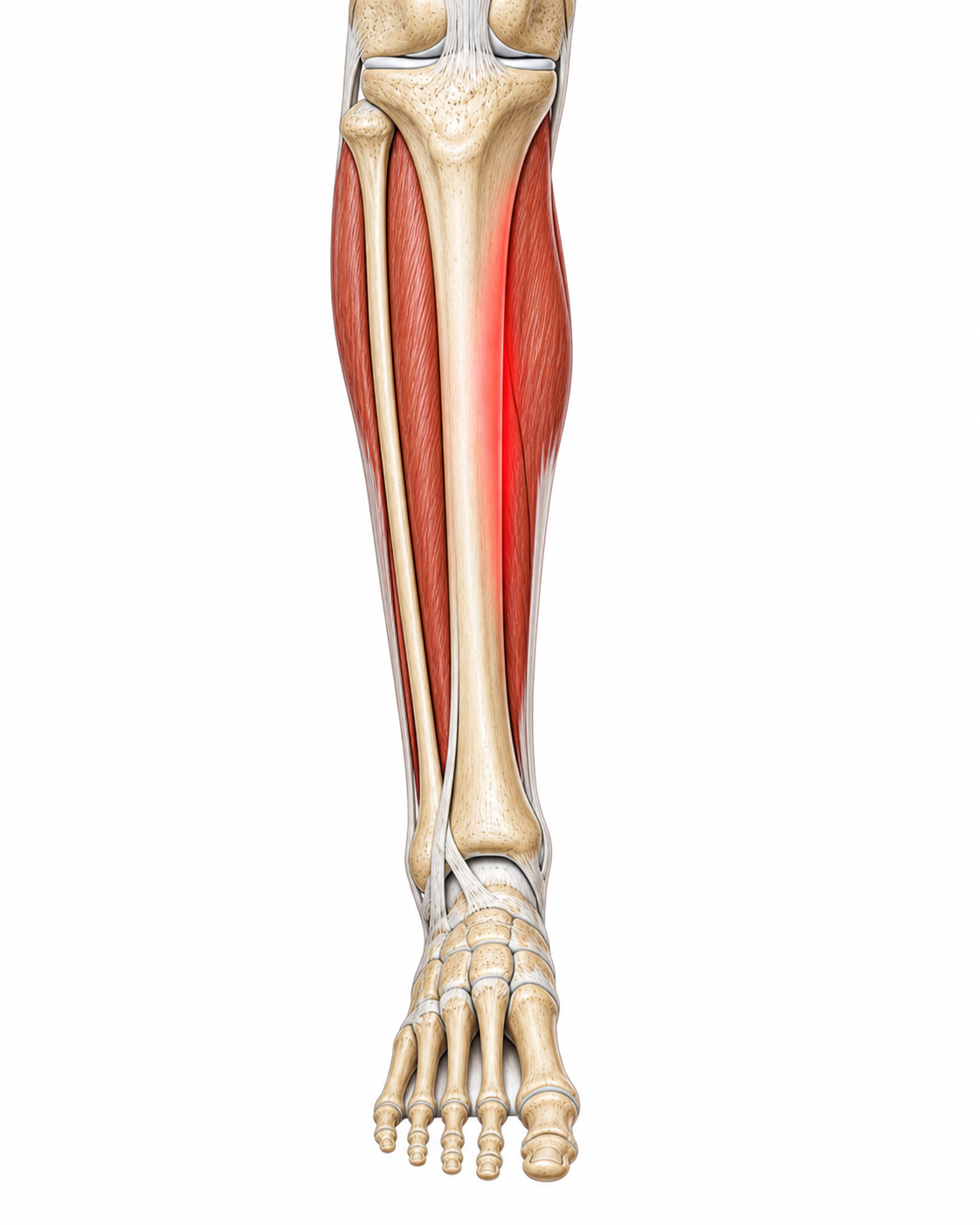
Medial Tibial Stress Syndrome (shin splints)
Medial tibial stress syndrome is an overuse injury that affects your shin and the surrounding muscles. The condition is commonly seen in those who perform running or jumping activities.
It can arise due to increases in training volume or alterations in your joint motion or muscle strength
we treat whatever life throws at you.
Use the interactive foot model to help identify your concern:
