corns and callous
Callous under your feet tells us a story. And there is so much more to it than just scraping the dead skin away. Read below to learn more about the Functional Soles difference for callous management
Callous is thickened skin that forms when an area of the foot is exposed to repeated pressure, rubbing or shear. Hard skin that is localised to one area of the foot is indicative to us that there is too much pressure through that particular part of the foot.
That does not mean it should be ignored. Where callus forms, how thick it becomes, and how quickly it returns can tell us a lot about how your foot is interacting with the ground, your shoes, and your daily activity. Callus and corns are commonly linked to pressure, friction, footwear fit, foot shape, and high activity levels.
A short term solution is to scrape the hard skin away, and most people will feel better straight away.
But that same pattern will repeat, so in a few short weeks that callous or corn is right back to square one.
So do you want a short term fix that keeps coming back? Or do you want to find out why and find a better long term solution?
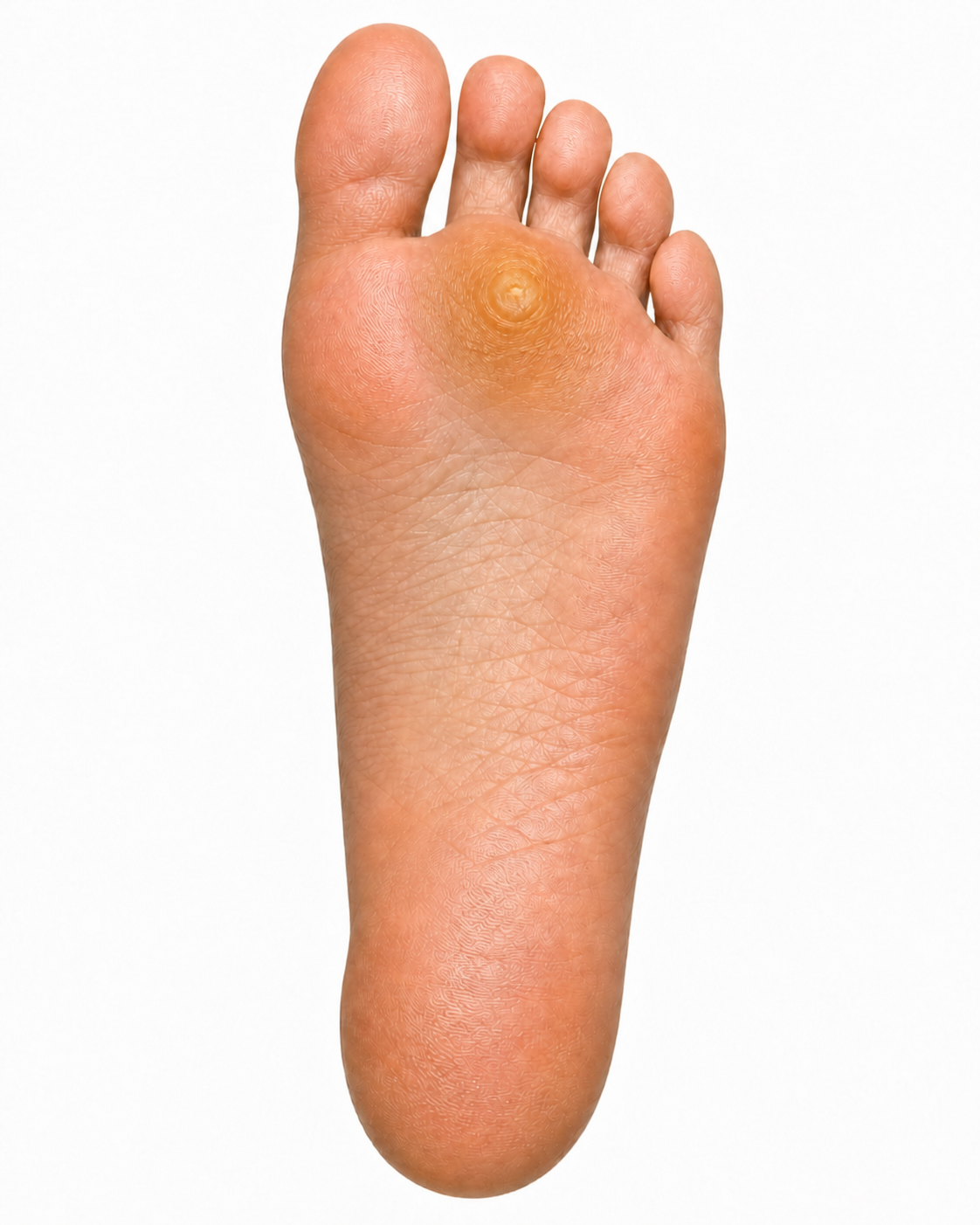
Why does callus form?
Your skin responds to repeated stress by producing more keratin, which makes the outer layer of skin develop faster, meaning it is thicker and harder. This is called hyperkeratosis. It often develops under the heel, across the ball of the foot, around the big toe, on the edges of the foot, or over prominent joints.
Common reasons include:
- pressure under a high-use area of the foot
- rubbing inside shoes
- tight or narrow footwear
- high walking, running, gym, or work demands
- bony prominences
- toe position changes
- reduced skin padding
- altered walking mechanics
Callus is not just “dry skin”. It is usually a mechanical skin response.
What does callus tell us?
Callus often leaves clues.
Callus under the big toe may suggest high pressure during push-off.
Callus under the ball of the foot may suggest forefoot overload or shoe compression.
Callus on the outside of the heel may relate to how your heel contacts the ground.
Callus on the tops or ends of toes often points toward shoe pressure or toe position.
We do not guess from callus alone. We assess the skin, footwear, foot shape, activity, and symptoms together.
What is the difference between callus, corns, and blisters?
A corn is usually smaller, deeper, and more focused. It can feel like a stone, splinter, or sharp pressure point under the skin. Corns often form over bony areas or where pressure is very concentrated.
A blister forms differently. Blisters are linked to friction, pressure, movement, moisture, and repeated shear cycles. The skin layers separate and fluid fills the space. This is why blisters often happen during running, hiking, sport, long shifts, new shoes, wet socks, or sudden increases in activity.
WHAT DOES CALLOUS UNDER THE second TOE MEAN?
Whenever a Functional Soles Podiatrist sees callous under the second toe joint, we want to explore how your foot, especially your big toe functions.
Callous under the second toe shows that there is excess of pressure going through this region. It likely indicates that the foot is unable to get over to the big toe joint to push off properly.
Functional Soles Podiatry can not only manage the callous formation, but also utilise in shoe padding, orthotic therapy and foot strengthening exercises to assist the big toe with taking the load, and reducing the pressure under the second toe.
When should you see a podiatrist?
Book an appointment if you have:
- painful callus
- callus that keeps coming back quickly
- cracked heels
- corns
- blisters from running, sport, or work shoes
- callus around a bunion or toe deformity
- bleeding, redness, swelling, or broken skin
- diabetes, reduced circulation, or reduced sensation
Do not cut callus yourself with blades or sharp tools. This can damage healthy skin and increase infection risk.
How can functional soles podiatry help?
At Functional Soles, we treat the skin and look for the reason it is happening.
Your appointment may include:
- safe removal of painful callus or corns
- reduction of thickened skin
- cracked heel care
- blister advice and prevention strategies
- checking your footwear fit and wear pattern
- advice on socks, lacing, and shoe width
- padding or offloading where needed
- skin care advice for maintenance
- checking whether pressure is coming from foot shape, footwear, or activity habits
For active people, this matters because small skin problems can change how you walk, run, train, or stand. A painful corn or blister can make you avoid pressure, shift your stride, or stop doing the things you enjoy.
What we offer
Our goal is to provide a long-term solution for you and your family.
We believe that every case is different and as such we will always work with you to find the best treatment for you and your needs.