Intermetatarsal Bursitis
Pain, swelling or a pebble-like feeling in the ball of your foot? Learn what intermetatarsal bursitis is, what causes it, and how podiatry can help..
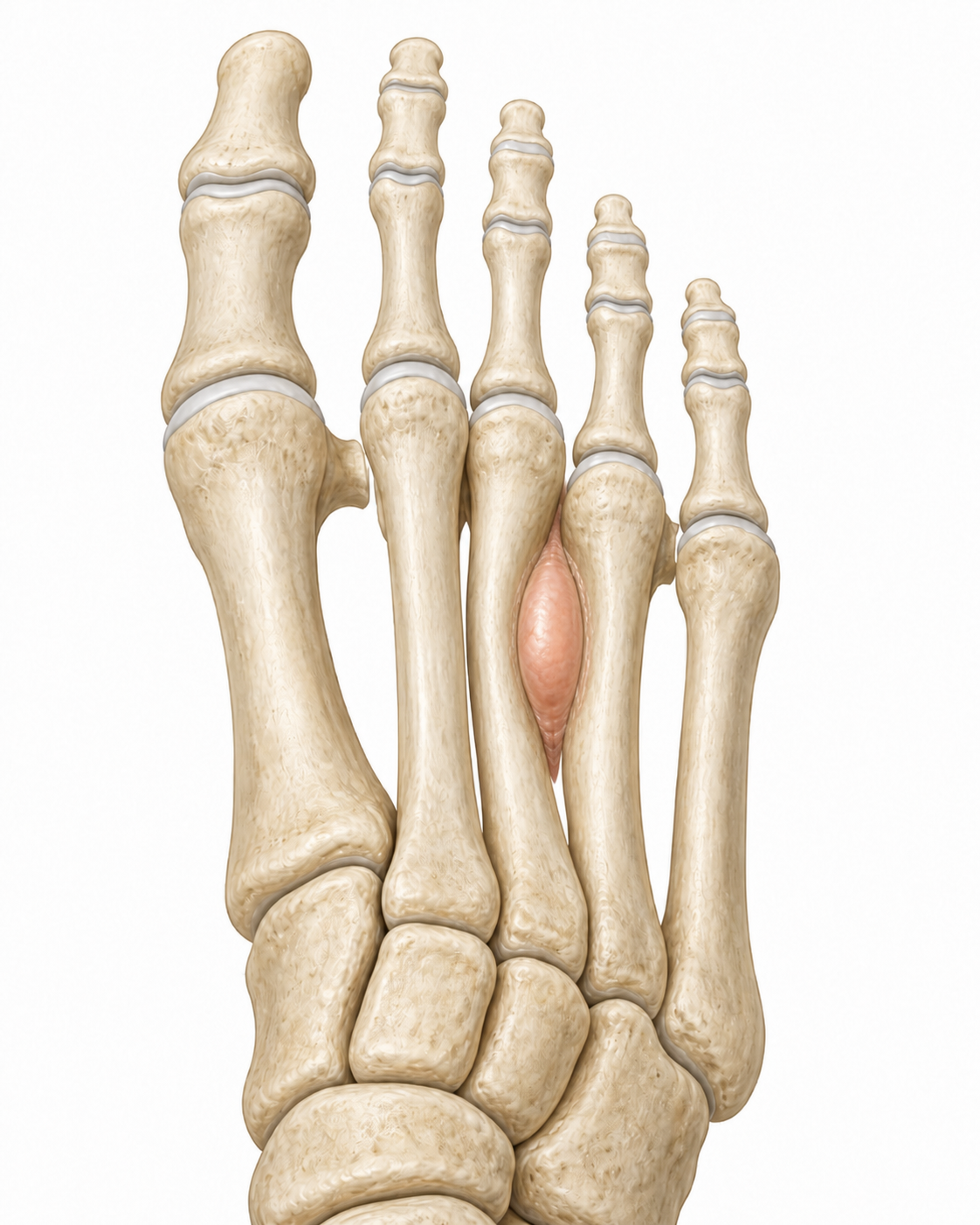
Intermetatarsal bursitis is irritation of a small fluid-filled sac that sits between the long toe bones in the ball of the foot.
Its job is to help reduce friction as the forefoot takes load. When that bursa becomes irritated or swollen, the front of the foot can start to feel crowded and uncomfortable.
Some people feel pain in the ball of the foot. Others describe fullness between the toes, pressure in the forefoot, or the feeling that something is sitting inside the shoe. It may feel like the front of the foot has less space than it should.
What does intermetatarsal bursitis feel like?
Intermetatarsal bursitis usually builds gradually rather than starting from one clear moment.
You might notice:
- pain in the ball of the foot
- pressure between the toes
- a swollen, full, or crowded feeling in the forefoot
- discomfort that gets worse the longer you are on your feet
- pain in tighter shoes
- discomfort when walking, running, or loading through the front of the foot
Some people describe it as feeling like there is something in the forefoot that should not be there. Others feel irritation between the toes or a dull ache through the ball of the foot.
The symptoms often become more noticeable with longer walks, more time standing, running, or shoes that squeeze the forefoot.
What causes intermetatarsal bursitis?
Intermetatarsal bursitis usually develops when the structures in the forefoot are being compressed or irritated repeatedly.
Common contributors include:
- tight or narrow footwear
- increased walking, running, or time on feet
- activities that place more load through the forefoot
- reduced space between the metatarsal heads
- forefoot mechanics that keep pressure in one area
- higher training loads
- footwear that does not suit your foot shape or activity
Often, the forefoot has simply been asked to tolerate more pressure than it can currently handle. Over time, repeated compression builds, the bursa becomes irritated, and the area becomes more sensitive under load.
Is intermetatarsal bursitis the same as Morton’s neuroma?
Although they can feel similar, they are two separate conditions.
Intermetatarsal bursitis involves irritation of the bursa (fluid sac) between the metatarsal heads.
Morton’s neuroma involves irritation and thickening of a nerve, that sits between the metatarsals.
The reason they get confused is that both conditions can cause pain, pressure, burning, or discomfort in a similar area of the forefoot. They can also be aggravated by similar things, such as tight shoes, long periods on your feet, or forefoot compression.
The location may be similar, but the structure involved is different.
That is why assessment matters. The right diagnosis helps guide the right treatment.
Why does intermetatarsal bursitis get worse in shoes?
Intermetatarsal bursitis is a condition where space matters. If the forefoot is being compressed inside the shoe, the bursa has less room. That can increase pressure between the metatarsal heads and make the area more irritated with each step.
Tight shoes, narrow toe boxes, or shoes that place more load through the ball of the foot can all contribute.
How is intermetatarsal bursitis treated?
Early treatment is usually focused on reducing pressure through the irritated part of the forefoot while keeping you moving. The aim is to change the environment around the irritated tissue so it can settle.
Treatment may include:
- footwear changes
- padding or deflection around the painful area
- shoe liner modifications
- orthotic therapy where needed
- activity and load modification
- gradual return to walking, running, or sport
- strength and control work if forefoot loading patterns need to change
The goal of treatment i reducing compression, calming the irritated tissue, and helping the forefoot tolerate load again
Do orthotics help intermetatarsal bursitis?
Orthotics can help in some cases, especially when the goal is to reduce pressure through the painful part of the forefoot. They are used as a load modifier, opening the window of opportunity to settle symptoms, before we start rebuilding strength and load
For intermetatarsal bursitis, that might mean improving how pressure moves through the forefoot, creating more comfort under the metatarsal heads, or reducing compression through the involved space.
Can I keep walking or running with intermetatarsal bursitis?
In many cases you can, but the load may need to be adjusted.
If every walk or run keeps irritating the same area, the bursa does not get much chance to settle. That does not always mean complete rest is needed, but it usually means something has to change.
That might be:
- reducing walking distance for a short period
- changing shoes
- avoiding narrow or compressive footwear
- modifying running volume
- using padding or offloading
- reducing time spent barefoot on hard surfaces
- avoiding repeated forefoot-heavy activity until symptoms calm
The goal is to find enough movement to keep you active, but not so much compression that symptoms keep flaring.
How we help at Functional Soles Podiatry
At Functional Soles, we assess why that part of the forefoot is being compressed and what needs to change.
That may involve looking at your footwear, foot shape, walking or running load, forefoot mechanics, and the specific area of tenderness or pressure.
Early on, we focus on reducing irritation.
That may include footwear advice, padding, shoe modifications, orthotic therapy where needed, and practical changes to your walking, running, or daily load.
Once the area is more settled, we help you build tolerance again.
The goal is simple: create space, reduce irritation, and make the forefoot comfortable under load again.
What we offer
Our goal is to provide a long-term solution for you and your family.
We believe that every case is different and as such we will always work with you to find the best treatment for you and your needs.