osgood schlatter disease
It is one of the most common causes of pain at the front of the knee in active children and teenagers during growth. It often shows up in sports that involve running, jumping, kicking, landing, squatting, or repeated changes of direction.
Osgood-Schlatter disease is one of the most common causes of pain at the front of the knee in active children and teenagers during growth.
It is most often seen around the early teenage years, commonly affecting active children during a growth spurt. It can occur earlier or later depending on when that child is growing, how active they are, and how much load is going through the knee.
Why does Osgood-Schlatter disease happen?
Osgood-Schlatter disease is not usually a one-off injury.
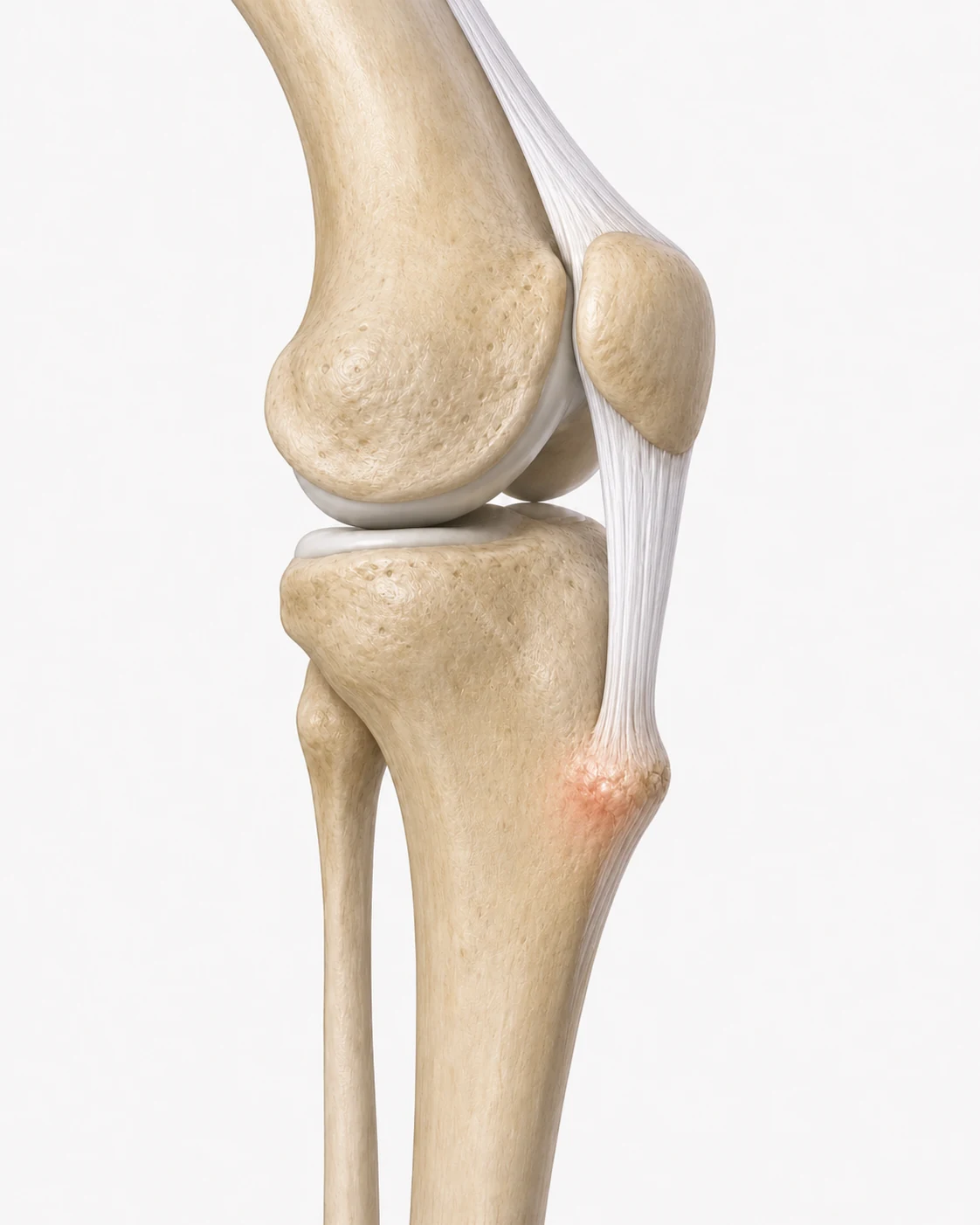
It is a growth-related traction injury. During growth, the area where the patellar tendon attaches into the shin bone, called the tibial tuberosity, can become more sensitive to repeated load. When the quadriceps and patellar tendon keep pulling on that area during sport and growth spurts, it can become irritated.
In simple terms, the tendon keeps loading a growth plate that is not tolerating that load well.
That is why the bump below the kneecap can become more obvious. The area can swell, stay tender, and feel harder or larger than the other side. Sometimes both knees are involved, but one side is often worse.
The painful area is usually very local. Your child can often put one finger directly on the sore spot.
What are the symptoms of Osgood-Schlatter disease?
Children with Osgood-Schlatter disease often notice pain at the front of the knee, directly over the bump below the kneecap.
Common symptoms include:
- pain at the tibial tubercle, just below the kneecap
- swelling or prominence of the bump below the knee
- tenderness when pressing on the area
- pain with running, jumping, kicking, squatting, stairs, or kneeling
- soreness during or after sport
- symptoms that flare when training load increases
- limping after activity if the knee becomes more irritated
Should my child stop sport with Osgood-Schlatters?
Complete rest is not often required. Some children need a short period of reduced sport if the knee is very irritable. Others can keep participating with smart changes to training load, intensity, frequency, or the types of activities they are doing.
If symptoms are mild and settle quickly, your child may be able to keep training with some adjustments. If pain is worsening, causing limping, changing how they move, or taking longer to settle after activity, the load likely needs to be reduced.
In more irritable cases, a short period of relative rest can help calm the area down.
What is the best treatment for Osgood-Schlatters?
Treatment is about reducing irritation and helping the knee tolerate load better while growth catches up.
That may include:
- reducing or modifying painful activities for a period
- adjusting sport volume, frequency, or intensity
- limiting high-irritation activities such as repeated jumping, sprinting, kneeling, or deep squatting when needed
- using pain response to guide how much is too much
- improving strength and control around the knee, hip, calf, and foot
- gradually rebuilding running, jumping, landing, and sport-specific load
The main goal is understanding what is overloading the area and helping your child build back up in a way the knee can tolerate.
How can a podiatrist help with Osgood-Schlatter disease?
At Functional Soles, we assess whether your child’s pain fits the pattern of Osgood-Schlatter disease, how irritable the tibial tubercle is, and what loads are consistently flaring it.
That means looking at:
- sport demands
- running and jumping load
- recent changes in training
- pain behaviour during and after activity
- knee strength and control
- hip, calf, and foot function
- how your child moves during relevant tasks
- what they can currently keep doing safely
From there, we help guide the next step.
That includes what needs to settle now, what your child can keep doing, what exercises are likely to help, and how to reduce the flare-up cycle without making sport feel like it has to disappear completely.
The goal of treatment is: Settle the pain, improve load tolerance, and help your child keep moving with more confidence and less frustration
What we offer
Our goal is to provide a long-term solution for you and your family.
We believe that every case is different and as such we will always work with you to find the best treatment for you and your needs.