Plantar Plate Injury
Pain under the ball of the foot, especially around the second toe, usually comes down to how that toe joint is handling load.
For a lot of people, an injury to the plantar plate feels like they are walking on a pebble. Then, over time, pushing off gets uncomfortable, the toe feels less secure, and things stop working the way they used to.
A plantar plate injury, sometimes called a plantar plate tear, affects the strong structure underneath the toe joint. The plantar plate helps keep the toe stable against the ground when you walk, stand, push off, or run. When it is irritated, stretched, or torn, the joint can become painful, less supported, and harder to load properly.
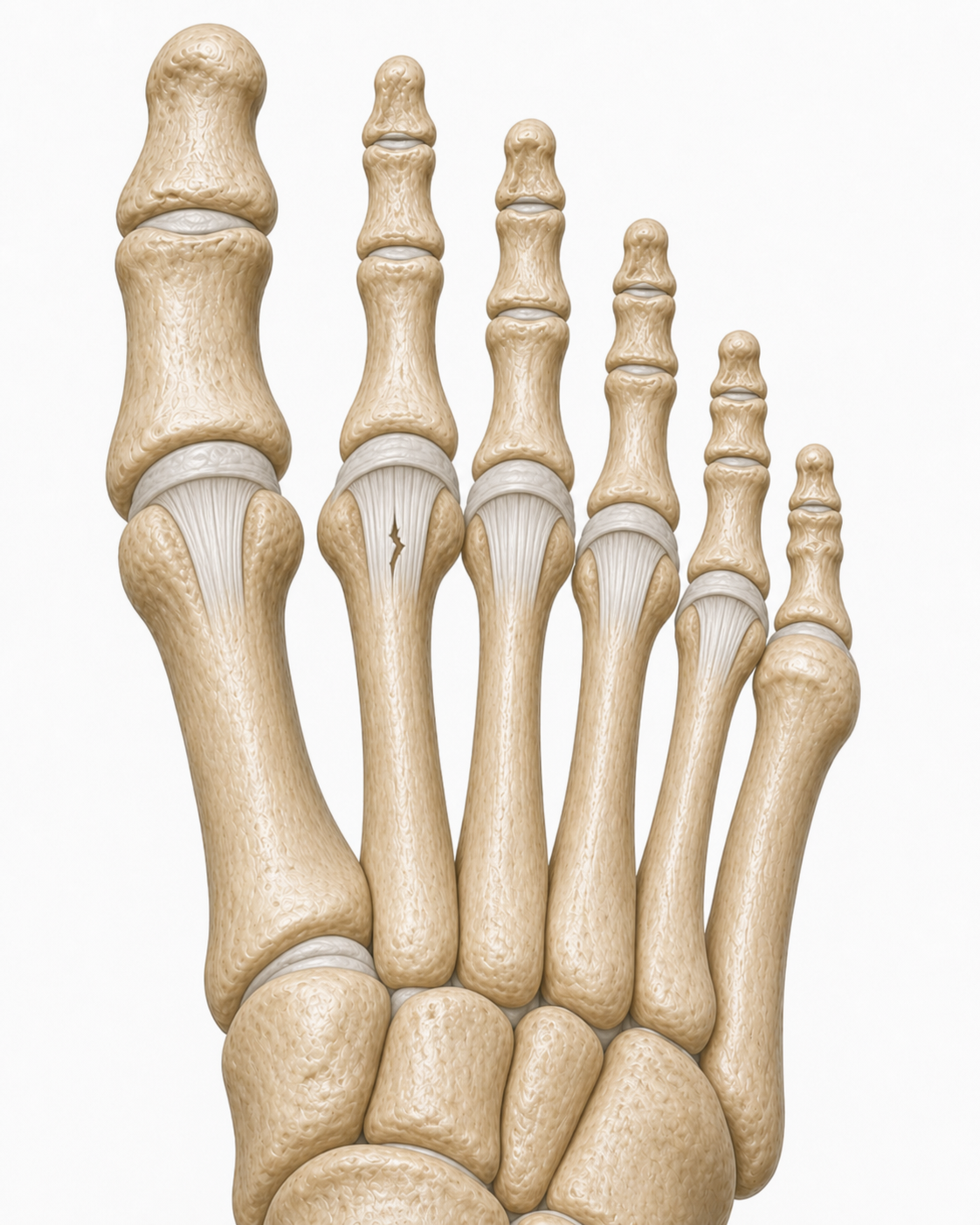
What is a plantar plate injury?
The plantar plate is a small ligament that sits underneath the toe joints. Its job is to help hold the toe down, stabilise the joint, and control load through the front of the foot.
When the joint is repeatedly asked to handle more load than it can tolerate, the plantar plate can become irritated or damaged. At first, this may feel like pain or pressure under the ball of the foot. If it keeps being overloaded, the toe may start to lift, drift, separate from the neighbouring toe, or feel less stable. The most commonly affected toe is usually the second toe.
That is why plantar plate injuries often start as a load problem and can become a stability problem.
What does a plantar plate injury feel like?
Most people notice a mix of pain and change in how the toe behaves.
Common symptoms include:
- Pain under the ball of the foot, often near the base of the second toe
- A pebble-like feeling under the toe joint
- Pain when pushing off while walking or running
- Swelling around the toe joint
- Discomfort when barefoot, in flexible shoes, or on hard floors
- The toe starting to lift, drift, separate, or feel unstable
- A feeling that the toe is not gripping the ground properly
What causes a plantar plate Tear?
This is usually a load distribution problem.
The second toe joint ends up doing more work than it should. Over time, more load goes through that joint, less load is shared elsewhere, and the structures under the joint are unable to tolerate the load.
This can be influenced by:
- The function of the big toe joint
- How load moves through the foot
- A longer second toe or longer second metatarsal
- Foot shape and forefoot structure
- Bunions or changes in toe position
- Time spent on the ball of the foot when walking and running
- Flexible footwear
- Increased walking, running, hills, stairs, or training load
The key point is simple: the joint is being asked to handle more than it can currently tolerate.
Do I have a plantar plate tear or Morton’s neuroma?
A plantar plate injury is usually more local to the joint itself. It often feels like pain directly under the toe joint, a pebble-like feeling under the foot, or discomfort when the toe bends upward. Over time, the toe may start to drift, lift, or feel unstable.
A Morton’s neuroma is usually more nerve-like. It may feel like burning, tingling, zapping, numbness, or pain that shoots into the toes.
They can overlap enough to confuse people for months, but they are not the same problem and they do not always need the same plan.
Can I keep walking or running with a plantar plate injury?
Sometimes, yes. Sometimes, we might have to temporarily reduce load. The goal is not to stop everything forever. The goal is to find the amount of load the joint can currently tolerate without being irritated every day.
If walking or running is making the toe more painful, more swollen, or more unstable, then the joint may need a temporary reduction in load. That might mean changing distance, speed, hills, footwear, surfaces, or how much time you spend on the forefoot.
A drifting or lifting toe is also a sign that the joint may need more offloading.
How do you treat a plantar plate tear?
1. Calm the joint down
Early on, the goal is to reduce stress through the plantar plate while keeping you moving where possible.
This may mean temporarily reducing forefoot-heavy activity, adjusting walking or running volume, changing footwear, reducing hills or stairs, or modifying how much the toe is being pushed upward during push-off.
The aim is simple: reduce irritation so the joint is not being stirred up every day
2. Support and offload
One of the quickest ways to help a plantar plate injury is to change how load moves through the front of the foot.
This may include taping the toe, offloading pressure under the painful joint, using orthotics to redistribute load, modifying the shoe liner, or choosing footwear that reduces irritation through the forefoot.
These supports are not the finish line. They help the joint tolerate load while capacity is being rebuilt.
3. Rebuild capacity
Once symptoms are settling, the focus shifts to helping the joint handle load again.
This may include improving forefoot loading tolerance, strengthening the calf, improving foot strength and control, restoring how the toes help with push-off, and gradually progressing back to walking, gym, or running.
How we help at Functional Soles Podiatry
We do not just look at the sore spot and hand you a generic fix.
We work out why that joint is taking too much load, what is no longer supporting it properly, and what needs to change so the front of the foot can do its job again.
That usually means reducing stress through the joint early, using the right support when it helps, rebuilding strength through the foot and calf, and guiding the toe back to doing what it should during walking and running.
What we offer
Our goal is to provide a long-term solution for you and your family.
We believe that every case is different and as such we will always work with you to find the best treatment for you and your needs.